
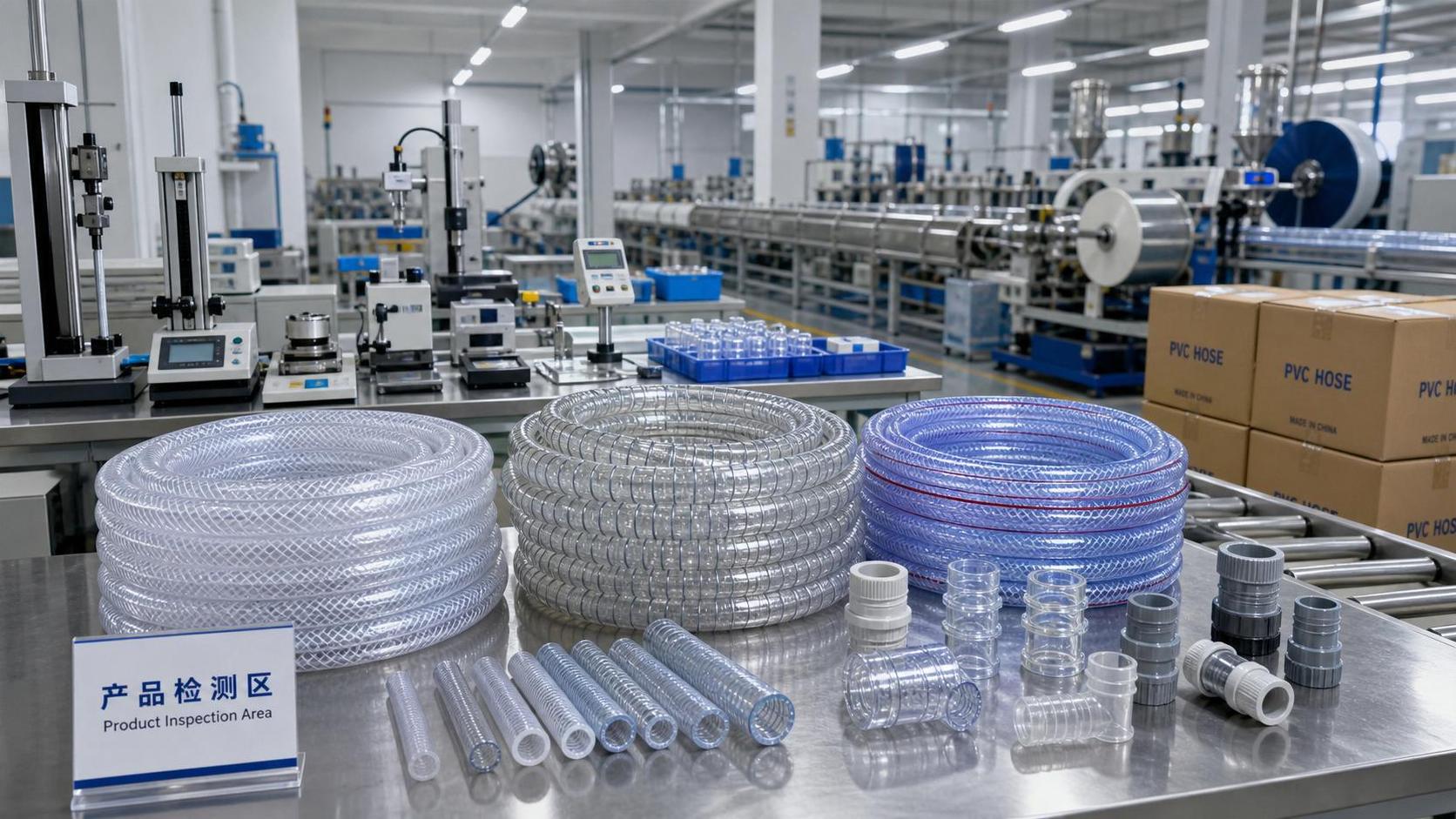
What Affects Custom Industrial Hoses Pricing in Bulk Orders?
Bulk pricing for Custom Industrial Hoses depends on much more than raw material cost.
In real sourcing work, buyers compare durability, compliance, lead time, and service support together.
That is why two hoses with similar sizes can carry very different quotes.
For industries using PVC管 and related fluid systems, a lower unit price does not always mean lower total cost.
The better approach is to understand what drives the quote before sending inquiries.
Once these cost drivers are clear, Custom Industrial Hoses become easier to compare, negotiate, and standardize across projects.
Material Selection Is Usually the First Price Driver
Material choice directly shapes the baseline cost of Custom Industrial Hoses.
PVC compounds are often cost-effective, flexible, and suitable for many transfer applications.
However, not every PVC hose formula performs the same under pressure, abrasion, or chemical exposure.
If the hose must handle oils, solvents, food media, or outdoor UV conditions, the resin system changes.
That change increases compound cost, testing requirements, and production control.
In many cases, reinforcement materials also matter as much as the inner tube.
Polyester yarn, steel wire, helix reinforcement, and anti-static layers all add cost differently.
So when reviewing Custom Industrial Hoses pricing, material should be evaluated as a full construction system, not a single layer.
Hose Construction and Performance Requirements Raise Complexity
Construction details often create the biggest price gap in bulk orders.
A light-duty hose for water transfer is very different from a suction hose for abrasive slurry.
Wall thickness, reinforcement layers, bend radius, vacuum capability, and burst pressure all affect manufacturing cost.
The more demanding the application, the tighter the production tolerance usually becomes.
This also means more inspection time and a higher chance of slower output per production line.
Typical pricing factors in hose construction include:
- Inner diameter and outer diameter tolerance
- Working pressure and safety factor
- Vacuum or suction performance
- Abrasion resistance requirements
- Temperature range and flexibility targets
- Static dissipation or conductive design
When Custom Industrial Hoses must solve several performance challenges at once, bulk pricing usually rises fast.
Customization Level Has a Direct Impact on Unit Cost
Not all customization adds the same value, and not all of it costs the same.
A standard hose with a custom print line is very different from a fully engineered assembly.
Color matching, branding, cut length, end finish, and packaging changes are usually manageable.
But custom compounds, unique dimensions, or new tooling can significantly change the price structure.
This is especially true when production cannot share existing molds or standard line settings.
Shorter customized runs also spread development cost over fewer meters.
Common custom features that affect Custom Industrial Hoses pricing are:
- Special hose size outside standard ranges
- Custom reinforcement design
- Embossed or printed branding
- Coupling integration or pre-assembled ends
- Private label packaging or barcode requirements
The practical takeaway is simple: customize what supports performance or supply chain efficiency, not what only looks different.
Compliance, Testing, and Documentation Add Hidden Cost
Compliance is often underestimated during price comparison.
For Custom Industrial Hoses used in food, pharmaceuticals, petrochemicals, or aviation-related systems, documentation matters greatly.
Requirements may include material traceability, pressure test records, batch reports, and third-party certifications.
Each of these steps consumes engineering time and quality control resources.
From a procurement perspective, these are not extra charges without purpose.
They reduce liability, protect operations, and improve supplier accountability after delivery.
Cost may increase when the order requires:
- FDA or food-contact related compliance
- REACH or RoHS documentation
- Pressure and vacuum test certificates
- Lot traceability and inspection records
- Third-party verification before shipment
For Custom Industrial Hoses, the cheapest quote without compliance support can become the most expensive mistake later.
Order Volume, Forecast Stability, and MOQ Shape Bulk Discounts
Bulk orders usually reduce unit cost, but only when production planning becomes more efficient.
If the order meets MOQ and runs continuously, setup waste drops and output improves.
That saving can be reflected in the final quote for Custom Industrial Hoses.
However, buyers should not focus only on one large release.
Forecast visibility across several months can be just as valuable as a single big order.
Suppliers price more confidently when they can reserve raw materials and line capacity in advance.
This is one reason framework agreements often produce better long-term hose pricing.
In short, stable demand lowers uncertainty, and lower uncertainty usually improves Custom Industrial Hoses pricing.
Shipping Terms and Global Logistics Change the Real Landed Cost
Many sourcing teams compare product price but overlook landed cost.
For Custom Industrial Hoses, freight can shift total cost more than expected, especially with bulky coils or assembled hose sets.
Incoterms, packaging style, palletization, and container loading efficiency all matter.
A lower EXW price may still lose against a better FOB or CIF offer.
This becomes more obvious when destination handling, customs clearance, and damage risk are included.
Key logistics cost variables include:
A reliable logistics partner can therefore protect both cost and delivery performance for Custom Industrial Hoses.
Supplier Capability Influences Price Consistency and Risk
Price is not only a product issue. It is also a supplier capability issue.
Experienced suppliers can optimize hose design, recommend better materials, and prevent over-specification.
That support often lowers total procurement cost, even if the initial quote is not the lowest.
Pratt International Trade Limited works in this exact space.
The company supports global industries with industrial hoses, rubber products, and fluid connection systems.
Its role goes beyond supply by offering technical guidance for abrasive slurries, corrosive chemicals, and extreme temperatures.
For sourcing teams, this kind of engineering input helps avoid specification errors and repeated buying cycles.
When reviewing Custom Industrial Hoses suppliers, consistency, compliance support, and problem-solving ability deserve real weight in the cost decision.
How to Control Custom Industrial Hoses Costs Without Sacrificing Performance
The best cost strategy is not pushing every supplier for the lowest number.
The smarter strategy is making the quote easier to optimize.
A practical sourcing checklist can help:
- Define media, pressure, temperature, and installation conditions clearly
- Avoid over-specifying hose performance without operational evidence
- Standardize sizes and lengths where possible
- Combine demand into scheduled bulk releases
- Confirm required certifications before quotation stage
- Compare landed cost, not only ex-factory price
- Choose suppliers able to provide technical and logistics support
These actions reduce back-and-forth communication and make Custom Industrial Hoses quotations more accurate from the start.
They also shorten lead time, reduce sourcing friction, and improve long-term supplier performance.
Final Takeaway
Custom Industrial Hoses pricing in bulk orders is shaped by specification depth, compliance needs, order structure, and logistics choices.
Material cost matters, but it is only one part of the decision.
The more complex the application, the more important supplier expertise becomes.
A strong sourcing process focuses on fit, compliance, reliability, and total landed cost together.
If upcoming projects require Custom Industrial Hoses for demanding fluid transfer environments, an early technical review is worth the time.
With the right specifications and the right partner, bulk purchasing becomes more predictable, more efficient, and far less risky.
Navigation
Message
Please give us a message